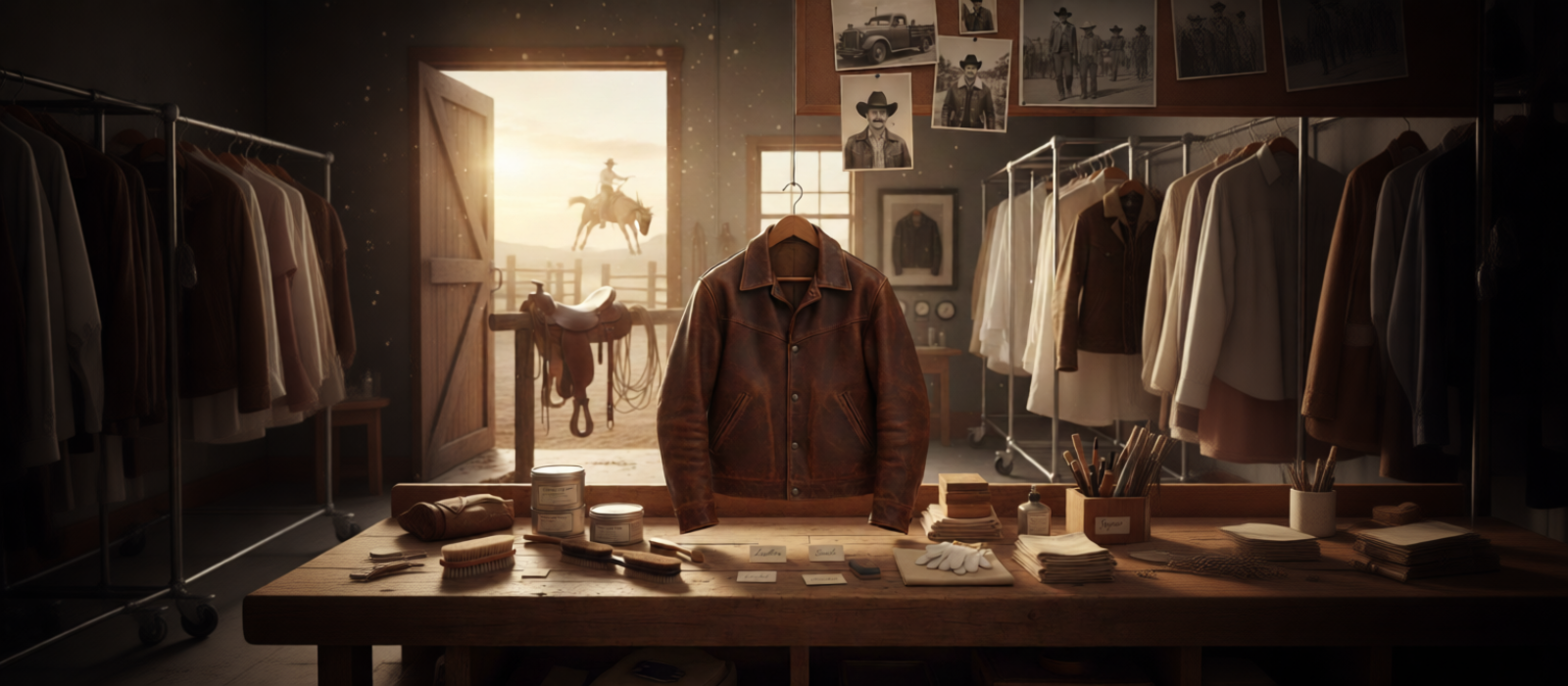
Let’s get one thing straight: That cowboy jacket you’ve worn to rodeos, packed across state lines, or inherited from your grandfather isn’t just outerwear—it’s a companion.
But I’ve seen too many of them ruined by well-meaning owners who thought they were doing the right thing. Conditioned leather with olive oil. Tossed a suede jacket in the washing machine. Stored a shearling duster in a plastic bag for six months—only to pull it out smelling like a basement.
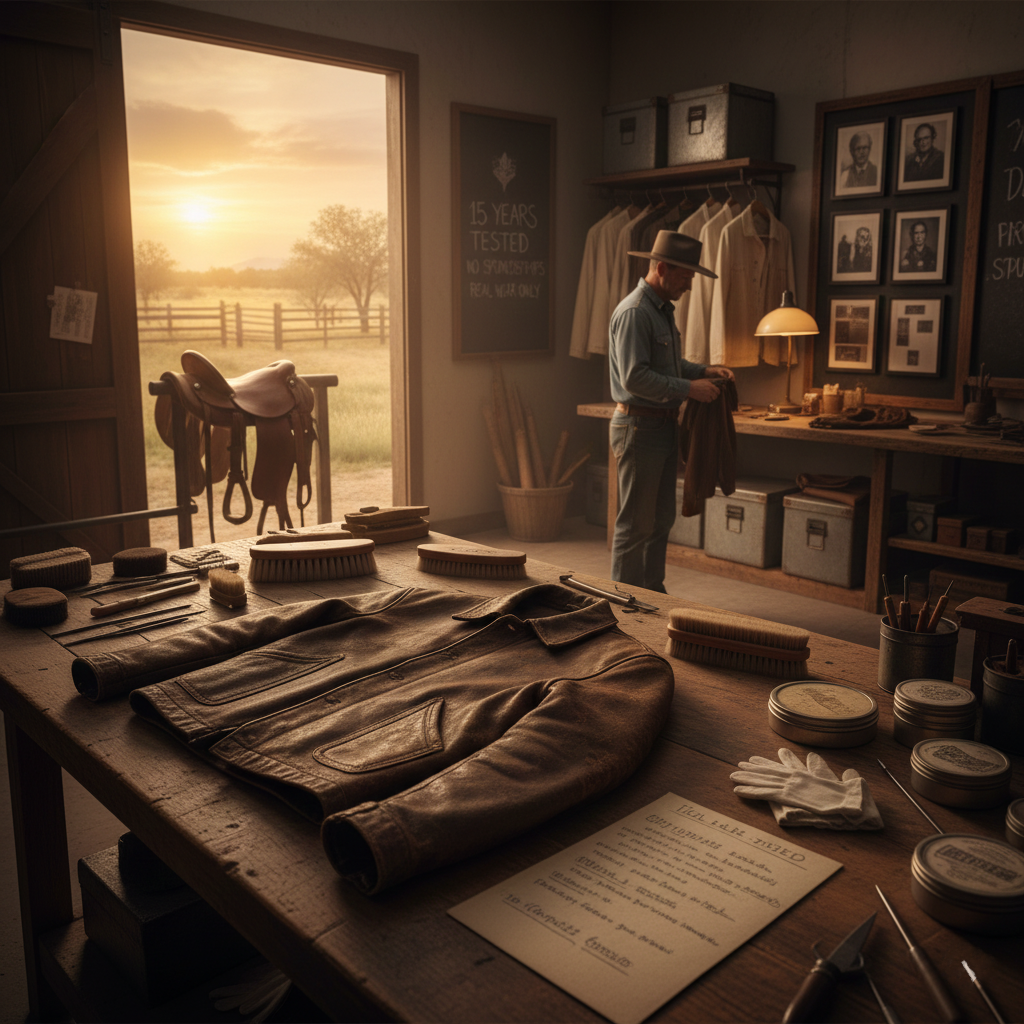
I’ve been there. Early in my career as a ranch hand and later as a western wear conservator, I destroyed more than one jacket trying to “clean” or “protect” it. But over 15 years—working with collectors, working cowboys, film costumers, and everyday wearers—I’ve figured out what actually works.
This guide isn’t theory. It’s battle-tested, ranch-proven, and museum-informed. And it’s designed to help your cowboy jacket last not just years—but decades, even generations.
Why Cowboy Jackets Demand Special Care (And Why Generic Advice Fails)
Most “leather jacket care” guides treat all leather the same. But a cowboy jacket isn’t a fashion biker jacket. It’s built for movement, weather, and work. It often has fringe, intricate stitching, mixed materials (leather + shearling + metal hardware), and a fit that’s meant to age with you—not against you.
The core truth: How you care for your jacket depends entirely on what it’s made of.
Get that wrong, and you risk cracking, fading, mold, or irreversible water damage. So let’s start with the foundation—materials.
Understanding Your Jacket’s Material: The Real First Step
Before you even think about storage or cleaning, you must know what you’re working with. Here’s how to identify it—and what it means for care.
🐄 Full-Grain or Top-Grain Leather (Most Common for Classic Cowboy Jackets)
- Feels: Thick, slightly stiff at first, develops a rich patina.
- Care needs: Regular conditioning (but not overdoing it), protection from heat and UV, never submerge in water.
- Watch out for: Oil-based conditioners that darken leather unevenly. And don’t use saddle soap—it’s too alkaline for garment leather.
👟 Suede or Nubuck
- Feels: Velvety, soft, shows every fingerprint and raindrop.
- Care needs: Brushing with the nap, specialized suede erasers for stains, waterproofing spray before first wear.
- Critical tip: Never use water on fresh stains. Blot immediately with a microfiber cloth, then let it dry fully before brushing.
🧵 Raw or Selvedge Denim
- Looks: Dark, unwashed, fades uniquely with wear.
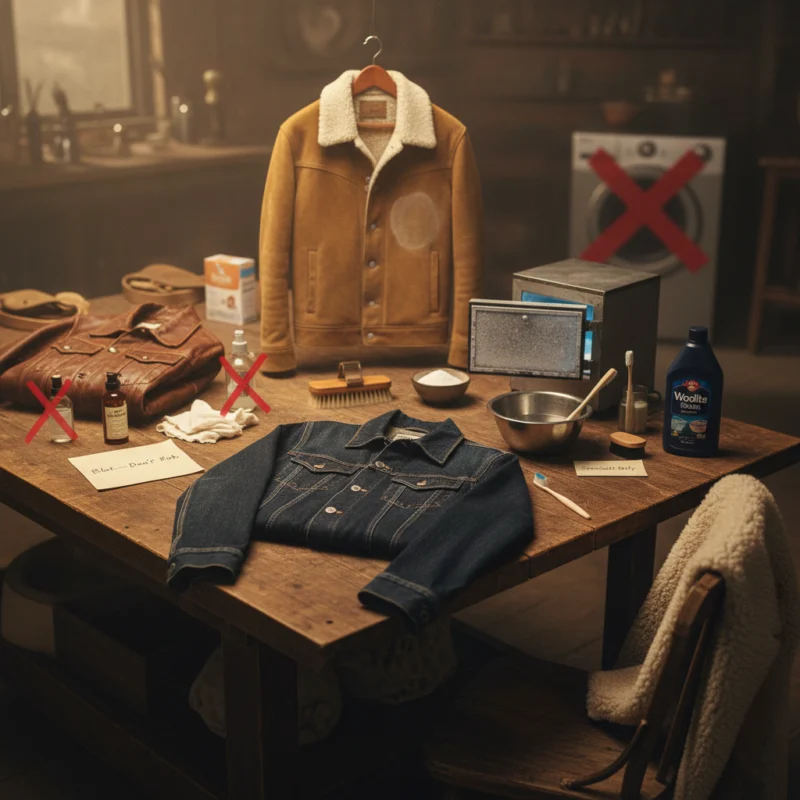
- Care needs: Never machine wash. Spot clean only. Freeze it to kill odors (yes, really). Air it out after wear.
- Myth busted: Washing “to soften it” ruins the dye and structure. Let your body break it in—that’s the point.
🐑 Shearling or Fur-Lined Jackets
- Feels: Warm, heavy, lined with wool or real fur.
- Care needs: Brush the shearling gently with a wide-tooth comb. Never store compressed. Humidity control is non-negotegotiable—mold grows inside the lining before you see it outside.
- Pro insight: Turn the jacket inside out and shake it out monthly during storage season. Let the lining breathe.
✨ Fringe (Leather or Suede)
- Not just decorative—it’s functional (historically used to shed rain).
- Care needs: Never fold or compress. Hang freely. If tangled, detangle wet with distilled water and a soft brush—never yank dry fringe.
- After rain: Lay flat to dry—never hang wet fringe. Weight will stretch it permanently.
Daily Wear vs. Collector Care: Your Routine Changes Everything
Storage: The #1 Mistake People Make (And How to Do It Right)
Wrong: Plastic dry cleaner bags.
Why it’s bad: Traps moisture = mold factory.
Right: Breathable garment bag + cedar + climate control.
- Clean first. Even invisible sweat invites mildew.
- Condition (if leather) 48 hours before storing—so it absorbs fully.
- Button or zip fully to maintain shape.
- Use a wide, contoured cedar hanger—supports shoulders without stretching.
- Place in a cotton or canvas garment bag (never plastic).
- Add silica gel packs inside the bag (not touching the jacket).
- Store in a cool, dark, dry closet—ideally 60–65°F with 45–55% humidity.
- Check every 6 weeks for musty smells or pests.
💡 Rancher trick: Hang a small cedar block inside the garment bag. Cedar repels moths and absorbs moisture—naturally.
Cleaning Deep Dive: What to Do (and Never Do)
Leather Cowboy Jackets
- Spot clean: Damp cloth + distilled water. Blot—don’t rub.
- Stains: Use a pH-balanced leather cleaner (Lexol, Bick 4). Test on an inside seam first.
- Never: Use vinegar, baking soda, or household cleaners. They strip natural oils.
Suede Cowboy Jackets
- Brush weekly with a brass-bristle suede brush (always in one direction).
- Water spots: Let dry completely, then brush vigorously to restore nap.
- Oil stains: Blot with cornstarch overnight, then brush off. If it sets, see a pro.
Denim Cowboy Jackets
- Freeze overnight to kill bacteria and odors.
- Spot clean with a toothbrush + cold water + tiny drop of Woolite Dark.
- Never machine wash—even “gentle cycle.” It shrinks, fades, and warps seams.
Shearling / Fur-Lined
- Exterior: Wipe with damp cloth.
- Lining: Use a soft-bristle brush. For deep cleaning, only use a fur/leather specialist. Home remedies ruin it
Conditioning & Waterproofing: Timing Is Everything
“How often should I condition my leather cowboy jacket?”
Answer: When it looks dry—not on a calendar.
Signs your leather needs conditioning:
- Feels stiff or waxy
- Looks dull or chalky
- You see fine cracks (act immediately)
Best conditioners:
- Bick 4 (won’t darken leather, pH neutral)
- Obenauf’s LP (heavy-duty, great for workwear)
- Avoid: Mink oil on dyed leather—it migrates dye and leaves dark splotches.
Waterproofing:
- Use only on dry, clean leather.
- Spray 6–8 inches away in a well-ventilated area.
- Let cure 24 hours before wearing.
- Reapply every 6 months if worn in rain/snow.
Hardware & Detail Care: Zippers, Snaps, Fringe, Stitching
YKK Zippers:
- Wipe with dry cloth.
- If stiff, rub a tiny bit of beeswax on teeth—never oil.
- Never force a stuck zipper—could rip vintage leather.
Snap Buttons:
- Polish with a dry microfiber cloth.
- If loose, take to a cobbler—DIY riveting often tears leather.
Stitching & Seams:
- Watch for loose threads. Don’t pull—snip carefully.
- Reinforce stress points (armholes, pockets) before they tear. A few hand stitches with waxed thread can add 10 years of life.
Fringe:
- After wear, gently shake out.
- Store hanging—never folded.
- If frayed, trim only the very end with sharp scissors—never pull threads.
When to Call a Pro (And How to Find a Good One)
Ask yourself just three questions:
- Will I wear this after Christmas?
If no, skip real leather—go synthetic. If yes, invest in something that ages well. - What’s my coldest likely temp?
Below 20°F? You need shearling. Above 35°F? Wool or lined suede suffices. - Do I want to blend in or stand out?
Dark brown/black = versatile. Red/green = festive but seasonal.
Still stuck? Try this:
- Men: Go one size up if you layer heavily.
- Women: Look for jackets cut for hips and bust—not just “unisex.”
- All: Sleeve length should hit mid-thumb. Too short = cold wrists. Too long = looks sloppy.
The Long Game: Building a Jacket That Ages With You
A great cowboy jacket isn’t meant to stay “new.” It’s meant to tell your story. The creases at the elbows, the sun fade on the shoulders, the softening at the collar—this is patina, not damage.
To encourage healthy aging:
- Wear it often (leather needs movement to stay supple)
- Rotate with other jackets so no one stress point bears all the load
- Avoid constant friction against backpacks or seatbelts—use a jacket hook in your truck
Lifespan expectations:
- Well-cared-for leather: 20–50+ years
- Suede: 10–20 years (more fragile)
- Raw denim: Indefinite (if never washed)
- Shearling: 15–30 years (lining is the weak point)
Cowboy Jacket Care Mistakes Even “Experts” Make
- Over-conditioning: Clogs leather pores → sticky surface → attracts dirt.
- Storing in attics or garages: Temperature swings = cracked leather.
- Using heat to dry: Hair dryers or radiators = warped shape + dried fibers.
- Ignoring the lining: Sweat soaks into viscose or cotton linings—causing mildew inside.
- Hanging on wire hangers: Creates permanent shoulder bumps.