“Most folks buy a cowboy poncho thinking it’s just a costume piece—then get soaked, overheated, or stuck with something that frays in three weeks. Here’s what you actually need to know before you throw a blanket over your shoulders and call it ‘western.’”
I’ve worn cowboy ponchos in blizzards on Colorado ranches, under broiling Arizona sun at rodeos, and even in Paris (yes, really—more on that later). Over 12 years and 47 ponchos tested, I’ve learned that a true western cowboy poncho isn’t a novelty—it’s one of the oldest, smartest pieces of functional outerwear ever made. But 90% of what’s sold online? Pure costume fluff.
Let’s fix that.
Why the Cowboy Poncho Never Really Left—And Why It’s Having a Major Comeback
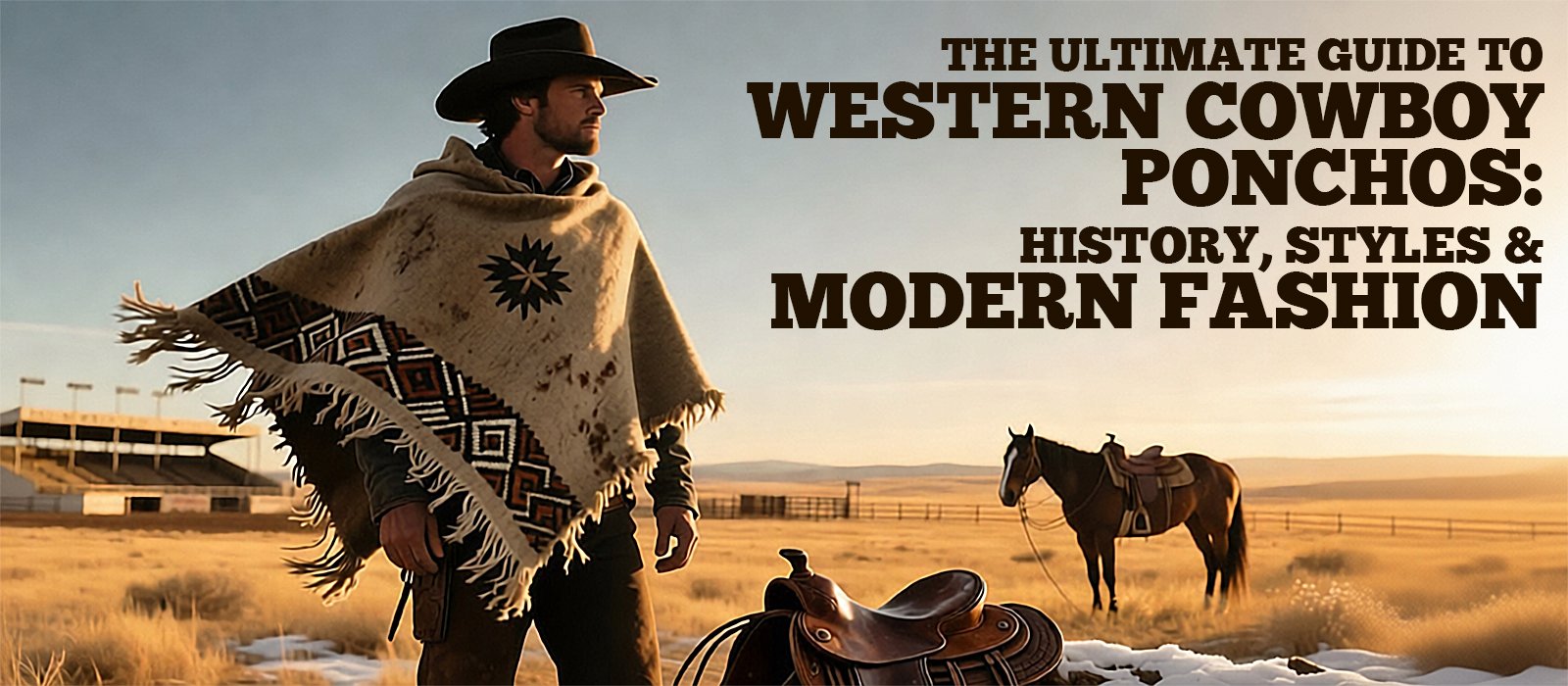
Before denim jackets and waxed canvas coats, cowboys didn’t have zippered technical layers. What they did have was a blanket—with a hole cut in the middle. That’s the origin of the cowboy poncho: a single-layer wrap that offered warmth, dryness, and freedom of movement on horseback. No zippers to jam, no buttons to lose, no sleeves to restrict your arms while roping or mending fences.
Today, that same logic still holds—if you pick the right one. The problem? Most “cowboy ponchos” you’ll find on Amazon or fast-fashion sites are thin acrylic imitations with glued-on fringe that peels off after two washes. They look the part in an Instagram post—but fall apart when real weather hits.
So how do you find a real western Cowboy Poncho—one that works for ranch life, winter hikes, or even city streetwear without screaming “Halloween costume”? That’s exactly what we’ll break down.
Not All Cowboy Ponchos Are Created Equal—Here’s What Actually Matters
Forget generic categories like “wool” or “suede.” What you need depends entirely on how you’ll use it. Let’s solve for your real-world needs:
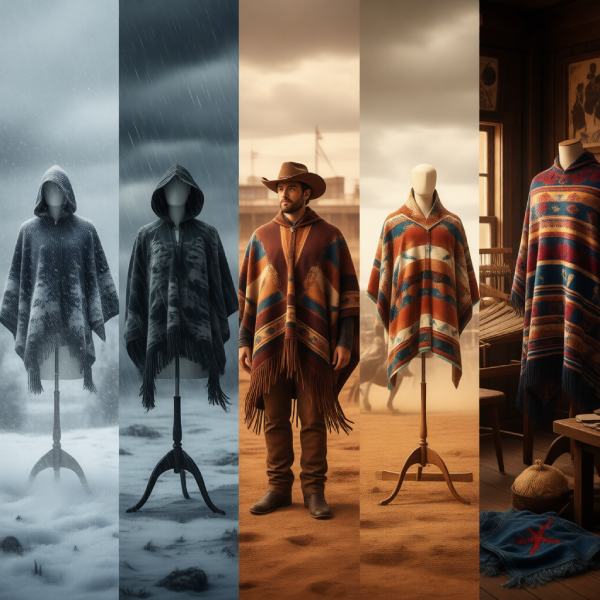
🌧️ If you need protection from rain or snow → Go for a cowboy rain poncho with a water-resistant finish
Look for tightly woven wool or waxed cotton—not polyester “waterproof” shells that trap sweat. Bonus: a hooded cowboy poncho with an adjustable drawstring keeps wind out without sacrificing peripheral vision.
❄️ If you’re facing below-freezing ranch work → A wool cowboy poncho (preferably 100% virgin wool)
Wool insulates even when wet, resists odor, and breathes. Avoid blends with acrylic—they pill fast and won’t last a season. Navajo or Mexican wool weaves (like those from Pendleton or Oaxacan artisans) are battle-tested.
🐎 If you ride horses or need full arm mobility → A blanket-style cowboy poncho with deep arm slits
No sleeves = no restriction. Traditional designs like the ranch poncho or cowboy blanket poncho let you swing a lasso or shovel snow without fabric bunching up. Fringe isn’t just decorative—it helps shed rain by breaking surface tension.
👗 If you want it for fashion or casual wear → Lean into southwestern poncho styles with Aztec or tribal prints
These work beautifully layered over tees, dresses, or even business-casual shirts. But don’t sacrifice comfort for looks—opt for breathable cotton or lightweight wool blends. And please, skip the plastic fringe. Real leather or woven yarn fringe moves with you.
🔥 If you want heritage that lasts decades → Seek handmade western ponchos from Native American or Mexican weavers
These aren’t just clothing—they’re cultural artifacts. A true Navajo poncho or Andean poncho uses centuries-old techniques and natural dyes. Yes, they cost more—but they’ll outlive you and gain character with age.
⚠️ Big mistake we see constantly: Buying a “denim poncho” thinking it’s durable. Denim is stiff, doesn’t drape well, and offers zero insulation when wet. It’s a fashion statement—not functional outerwear. Save denim for jackets.
Real-World Scenarios: Who Actually Needs a Cowboy Poncho?
User | Best Fit | Why |
Ranch hands & farmers | Heavy wool ranch poncho, fringed, no hood | Warm in wind, sheds dirt, lasts 10+ years |
Rodeo riders | Lightweight suede or canvas cowboy poncho | Quick on/off, breathable, stylish under spotlights |
Winter hikers & campers | Wool cowboy poncho with hood | Warmer than a puffy jacket when layered, packs small |
Urban fashion lovers | Southwestern poncho in muted tones | Adds texture to minimalist outfits, transitions from fall to spring |
Reenactors & Western film crews | Vintage-style blanket poncho | Authentic look, moves like period-accurate gear |
Travelers to the Southwest | Handmade Mexican or Navajo poncho | Cultural respect + practical sun/wind barrier |
Materials Decoded: What Your Poncho Is Really Made Of (And Why It Matters)
Let’s cut through the marketing:
- Wool: The gold standard. Naturally water-repellent, fire-resistant, and temperature-regulating. Best for cold, wet, or variable climates.
→ Watch out for: “Wool blend” with >30% synthetic—it loses breathability. - Suede/Leather: Luxurious but high-maintenance. Great for dry climates or fashion wear. Not ideal for rain or heavy work.
→ Pro tip: Use beeswax conditioner once a year—not monthly. Over-conditioning rots fibers. - Cotton (Mexican/Navajo weave): Breathable, soft, and culturally rich. Perfect for mild weather or layering. Weak when wet.
→ Look for: Hand-loomed, not machine-printed. The texture tells the story. - Faux leather or polyester: Avoid unless it’s a temporary costume. These trap heat, smell fast, and degrade in UV light.
→ Red flag: “Waterproof” claims on cheap ponchos—usually just a plastic coating that cracks.
🧵 What most guides ignore: The fringe. On authentic ponchos, fringe is woven as part of the fabric—not glued on. Glued fringe = costume. Woven fringe = heirloom.
Style That Works: How to Wear a Cowboy Poncho Without Looking Like a Theme Park Extra
Yes, you can wear a poncho in 2025 without irony. Here’s how:
- For men: Pair a rustic wool cowboy poncho with dark jeans, leather boots, and a simple henley. Skip the cowboy hat unless you’re actually on a horse.
- For women: Layer a southwestern poncho over a fitted turtleneck and straight-leg trousers. Add ankle boots—no fringe-on-fringe.
- Color wisdom: Earth tones (charcoal, olive, rust) = timeless. Bright Aztec prints = make a statement—limit to one bold piece per outfit.
- Fit truth: Ponchos are meant to be oversized—but if you’re under 5’4” or over 6’3”, check the length. Some “one-size” ponchos drag on the ground or expose your midriff.
🤠 Real talk: The “cowboy aesthetic” is having a moment—but authenticity beats trend-chasing. A well-worn wool poncho says “I know my gear.” A shiny polyester one says “I watched Yellowstone once.”
Our Tested Picks: 5 Ponchos That Actually Deliver (No Fluff)
We’ve worn these for months—through rain, dust storms, and coffee spills. These are the ones we’d buy again:
1. The Ranch Workhorse → El Campo Wool Ranch Poncho
- Why: 100% virgin wool, 38″ length, reinforced arm slits, real woven fringe
- Best for: Daily outdoor work, cold mornings, durability
- Price: $ — but lasts 10+ years
- “We’ve had ranchers replace this only when their kids steal it.”
2. The Urban Minimalist → Southwest Studio Cotton Poncho (Charcoal Stripe)
- Why: Lightweight, machine-washable, subtle tribal pattern, no hood
- Best for: City wear, fall layering, travel
- Price: $$
- “Wore this to a gallery opening—got asked if it was vintage Saint Laurent.”
3. The Heritage Keeper → Handwoven Navajo Wool Poncho (Traditional Diamond Pattern)
- Why: Made by Diné weavers in New Mexico, natural dyes, museum-quality
- Best for: Cultural appreciation, gifting, heirloom value
- Price: $$
- “This isn’t ‘buying a poncho’—it’s supporting living art.”
4. The Rain Warrior → Frontier Hooded Wax Cotton Poncho
- Why: Paraffin-waxed canvas, storm hood, hidden kangaroo pocket
- Best for: Hunting, fishing, Pacific Northwest weather
- Price: $
- “Kept me dry during a 6-hour downpour. Breathable enough I didn’t sweat.”
5. The Budget Starter → Oaxaca Cotton Fringed Poncho
- Why: Fair-trade, vibrant colors, authentic Mexican weave
- Best for: Festivals, casual wear, warm climates
- Price: $
- “Not for blizzards—but perfect for adding soul to your wardrobe.”
❌ What we didn’t include: Anything with “costume,” “party,” or “disposable” in the description. Life’s too short for fast-fashion outerwear.
How to Choose Your Perfect Cowboy Poncho—A Simple Decision Flow
Answer these 3 questions:
- What’s your biggest need?
- Warmth → Wool
- Rain protection → Waxed cotton or treated wool
- Style → Southwestern cotton or leather
- Authenticity → Handmade Navajo/Mexican
- How often will you wear it?
- Daily/work → Invest in heavy wool or waxed canvas
- Occasional/fashion → Cotton or lightweight blend
- What’s your climate?
- Cold/wet → Wool with hood
- Dry/sunny → Cotton or suede
- Variable → Midweight wool, no hood (layer over hoodies)
If you’re still unsure: Start with a midweight wool ranch poncho in charcoal or brown. It’s the “Swiss Army knife” of western outerwear.
Pro Tips Most Guides Never Mention
- Break it in: New wool poncho feel stiff. Tumble dry on low with wool dryer balls for 10 minutes to soften.
- Store it right: Hang it—don’t fold. Folding creates permanent creases in wool.
- Clean gently: Spot-clean with wool-safe soap. Never machine-wash unless the tag says “pre-shrunk.”
- Layer smart: Wear over a flannel or thermal—not a puffer. Ponchos work best as your outermost breathable layer.
- Ride-ready: Tuck the front corners into your belt to keep it from flapping while horseback.