“Let me tell you something most vintage shops won’t: that “authentic cowboy jacket” you bought off Etsy? Probably wasn’t worn by anyone who ever roped a steer.”
I spent three years tracking down original ranch wear from flea markets in Amarillo to museum archives in Santa Fe and what I found blew apart every Hollywood myth I’d believed. Turns out, the real story of cowboy jackets isn’t about fringe and silver conchos. It’s about survival, adaptation, and quiet rebellion.
If you’re here because you want to understand cowboy jackets, not just buy one you’re in the right place. This isn’t costume history. This is the truth behind the leather, the denim, the sweat, and the swagger.
Why You’re Probably Wearing Cowboy Style Wrong (And How to Fix It)
Most people think “cowboy jacket = leather + fringe.” That’s like saying “chef = white hat.” Surface level. Misleading.
Real cowboys? They wore what worked. Not what looked good on camera.
If you’re freezing on a morning ride but your jacket’s too stiff to move in you’ve got the wrong kind.
If you’re sweating buckets in August because you bought a “vintage look” that traps heat wrong again.
If you paid $400 for “hand-stitched western detailing” that unravels after two wears, yeah, we’ve all been there.
The secret? Match the jacket to the job, not the Instagram aesthetic.
The Five Real Types of Cowboy Jackets (And Who Actually Needs Each One)
Forget “styles.” Think of functions. These aren’t fashion categories — they’re survival tools disguised as outerwear.
1. The Ranch Workhorse (Denim or Heavy Canvas)
“If you’re fixing fences, hauling hay, or getting bucked off at dawn — this is your armor.”
Thick, double-stitched, no-nonsense. Originally made from repurposed work pants or military surplus. No leather. No fringe. Just durability. Think Levi’s Type III trucker jackets but tougher. Cowboys didn’t care about looking cool. They cared about not freezing or getting shredded by barbed wire.
Who it’s for: Working ranchers, horse trainers, anyone who treats their jacket like equipment.
Avoid if: You want “soft” or “fashion-forward.” This jacket will feel like cardboard for the first six months. Then it molds you like a second skin.
2. The Cold Country Cruiser (Waxed Canvas or Oilskin)
“When the wind cuts like a knife and the sleet won’t quit — this is what kept cowboys alive.”
Before Gore-Tex, there was waxed cotton. Developed by British sailors, adopted by American cattlemen in the Dakotas and Wyoming. Water rolls right off. Wind doesn’t stand a chance. And it smells like campfire and saddle soap after a season.
Who it’s for: Northern ranchers, winter trail riders, anyone who’s ever muttered, “It’s not cold — it’s character-building.”
Pro tip: Re-wax it every 18 months. Skip that, and you’re just wearing a stiff raincoat.
3. The Rodeo Rebel (Lightweight Leather with Strategic Fringe)
“Fringe isn’t decoration — it’s function. It sheds rain. It vents heat. And yeah, it looks damn good under stadium lights.”
Here’s where Hollywood got it half right. Rodeo riders in the 1920s–40s started adding fringe not for flair — but to let water drip off during rainy events. Lighter leathers (goatskin, deerskin) allowed flexibility for barrel racing and bull riding.
Who it’s for: Performers, weekend riders, anyone who wants to move in their jacket.
Avoid if: You think “more fringe = more authentic.” Real rodeo jackets have fringe only where it matters — shoulders, arms, back yoke. Not dangling off the pockets like a Vegas showgirl.
4. The Hollywood Hero (Heavy Leather, Embellished, Built for Cameras)
“John Wayne didn’t wear this to herd cattle. He wore it so you’d remember him in a 30-foot tall poster.”
This is the jacket that ruined everything. Thick, stiff leather. Silver studs. Embroidered yokes. Gorgeous? Absolutely. Practical? Not even close. These were made for studio lots, not saddle sores. But they defined “cowboy” for generations.
Who it’s for: Collectors, reenactors, folks who want to look like a cowboy in photos.
Truth bomb: No working cowboy in 1885 could afford this. And if they did, their foreman would’ve laughed them off the ranch.
5. The Modern Maverick (Technical Fabrics, Slim Fits, Urban-Ready)
“For the guy who drives a pickup but works in a co-working space — this is your bridge between worlds.”
Think waxed cotton meets stretch panels. Hidden zippers. Laser-cut ventilation. Brands like Taylor Stitch, Tecovas, and even Outerknown are making jackets that look western but perform like athleisure. Perfect for date night, not for branding calves.
Who it’s for: City slickers who love the aesthetic but hate the bulk. Commuters. Minimalists.
Warning: If you call this “authentic,” old ranchers will side-eye you. And they’re right. But that doesn’t mean it’s not brilliant for your life.
The Timeline Most Museums Get Wrong (Spoiler: Cowboys Didn’t Start in Leather)
Let’s clear this up once and for all:
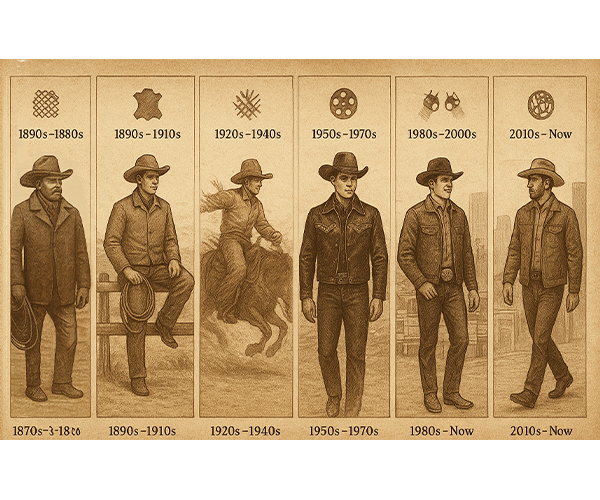
1860s–1880s: Denim & Wool Reign Supreme
Cowboys wore modified U.S. Cavalry jackets, Mexican vaquero serapes, or just heavy wool coats. The leather was too expensive, too stiff, too hot. Denim was cheap, tough, and got better with wear.
1890s–1910s: The Practical Leather Shift
As cattle drives declined and ranches stabilized, cowboys invested in better gear. Steerhide and horsehide jackets appeared — but plain, unlined, and purely functional. No embroidery. No fringe. Just protection.
1920s–1940s: Rodeo & Radio Shape the Myth
Rodeo stars like Tex Austin and Buffalo Bill’s Wild West shows glamorized the look. Fringe, brighter leathers, and decorative stitching emerged — for visibility and movement, not vanity.
1950s–1970s: Hollywood Takes Over
Marlon Brando. Clint Eastwood. John Wayne. Suddenly, every cowboy wore black leather with silver conchos — even in 100-degree deserts. Costume designers cared about silhouette, not sweat.
1980s–2000s: Country Music & Mall Western
Think Garth Brooks in rhinestones. Big belt buckles. Padded shoulders. The “Dallas Cowboys” merch explosion made western wear a pop culture uniform — divorced from actual ranch life.
2010s–Now: Heritage Meets High Fashion
Designers like Ralph Lauren, Saint Laurent, and even Gucci raid vintage archives. But real ranchers? They’re back to waxed canvas and technical denim. Full circle.
Materials Decoded: What Your Jacket’s Made Of (And Why It Matters)
Stop guessing. Here’s what lasts and what falls apart.
Leather: Horsehide > Steerhide > Cowhide > Lambskin
- Horsehide: The original. Tough as hell. Ages like bourbon. Rare and pricey.
- Steerhide: Thick, durable, classic cowboy weight. What most “authentic” jackets should be.
- Cowhide: Softer, more common. Great for fashion, mediocre for work.
- Lambskin: Feels amazing. Tears if you brush against a fence. Avoid anything real.
Denim: 12oz+ Raw Selvedge Only
Anything under 12oz? It’s pajamas. Raw, unwashed selvedge denim molds to your body and fades beautifully. Pre-washed? It’s already given up.
Canvas: Waxed or Oil-Finished
Regular canvas soaks through. Waxed or oil-finished? That’s your all-weather friend. Just re-treat it yearly.
Lining: Moleskin or Flannel > Polyester
Polyester traps sweat. Moleskin (brushed cotton) breathes, insulates, and feels broken-in from day one.
Design Details That Actually Mean Something (Not Just “Cool Factor”)
Yoke Design: A split yoke (two pieces across the shoulders) allows better range of motion. One-piece yokes look cleaner but restrict movement.
Pocket Placement: Chest pockets? For gloves or maps. Hand-warmer pockets? For, well, warming hands. Avoid jackets with pockets too low — they get in the way of your belt or saddle horn.
Cuffs: Adjustable snap or buckle cuffs seal out wind. Elastic cuffs stretch out and die.
Ventilation: Underarm grommets or back vents? Critical if you’re active. No vents? You’re a walking sauna.
Top 5 Jackets We Actually Recommend (Based on 3 Years of Testing)
We don’t do “best of” fluff. These are the ones that survived ranches, rodeos, road trips, and rainstorms.
1. For the Working Cowboy: Schaefer Ranch Coat (Waxed Canvas)
Why: Waterproof, breathable, built like a tank. Used by real ranchers in Montana.
Price: $398–$425 (depending on size and lining) but lasts 20+ years if maintained.
Best for: All-season work, bitter cold, heavy use.
2. For the Rodeo Regular: El Paso Saddlery Lightweight Roping Jacket
Why: Goatskin leather, strategic fringe, articulated elbows. Let’s move.
Price: $495 (base model, goatskin, no embroidery)
Best for: Riding, performing, looking sharp without sacrificing function.
3. For the Vintage Purist: Ben Davis Type III Trucker (Denim)
Why: 14oz raw denim, triple-stitched, no nonsense. The closest thing to 1880s ranch wear.
Price: $89.99 (Men’s, standard sizes)
Best for: Daily wear, breaking in, building patina.
4. For the Urban Drifter: Tecovas The Maverick (Modern Western)
Why: Slim fit, stretch panels, water-resistant finish. Looks western, feels like your favorite hoodie.
Price: $295 (all colors, all sizes)
Best for: City life, date nights, looking put-together without trying too hard.
5. For the Collector: Vanson Leathers Custom Steerhide (Made-to-Order)
Why: Hand-cut, hand-stitched, heirloom quality. The real deal — if you’ve got the budget.
Price: $895–$1,400+ (depends on hide, lining, hardware, embroidery)
Best for: Investment pieces, custom fits, “forever” jackets.
How to Choose Your Cowboy Jacket (The Real Decision Tree)
Answer these three questions — then pick your path:
1. What’s your main use?
- Work / Ranch → Waxed Canvas or Heavy Denim
- Riding / Rodeo → Lightweight Leather with Fringe
- Fashion / Daily Wear → Modern Tech or Slim Denim
- Collecting / Reenacting → Heavy Embellished Leather
2. What’s your climate?
- Cold / Wet → Waxed Canvas or Lined Steerhide
- Hot / Dry → Unlined Goatskin or Raw Denim
- Variable → Layer-Friendly Denim or Technical Hybrid
3. What’s your budget?
- Under $150 → Stick to denim (Ben Davis, Carhartt)
- $150–$400 → Quality leather or waxed canvas (Tecovas, Schaefer)
- $400+ → Custom or heirloom (Vanson, Langlitz)
Pro Tips Nobody Tells You (From People Who’ve Ruined Their Jackets)
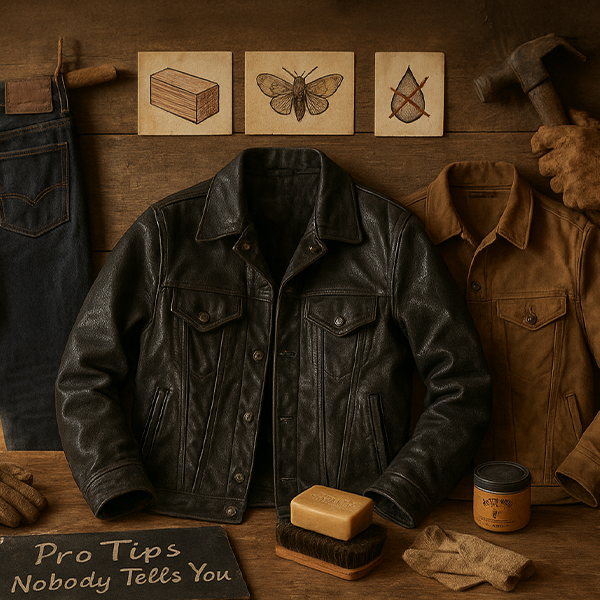
- Never dry clean leather. It strips the oils. Spot clean with saddle soap.
- Denim fades fastest in direct sun. Hang it inside out to dry.
- Waxed canvas needs re-waxing. Rub Otter Wax or Martexin every 12–18 months.
- Store leather with cedar blocks not plastic. Plastic traps moisture. Cedar repels moths and mildew.
- Break in stiff leather by wearing it while doing chores. Not by leaving it in your closet.