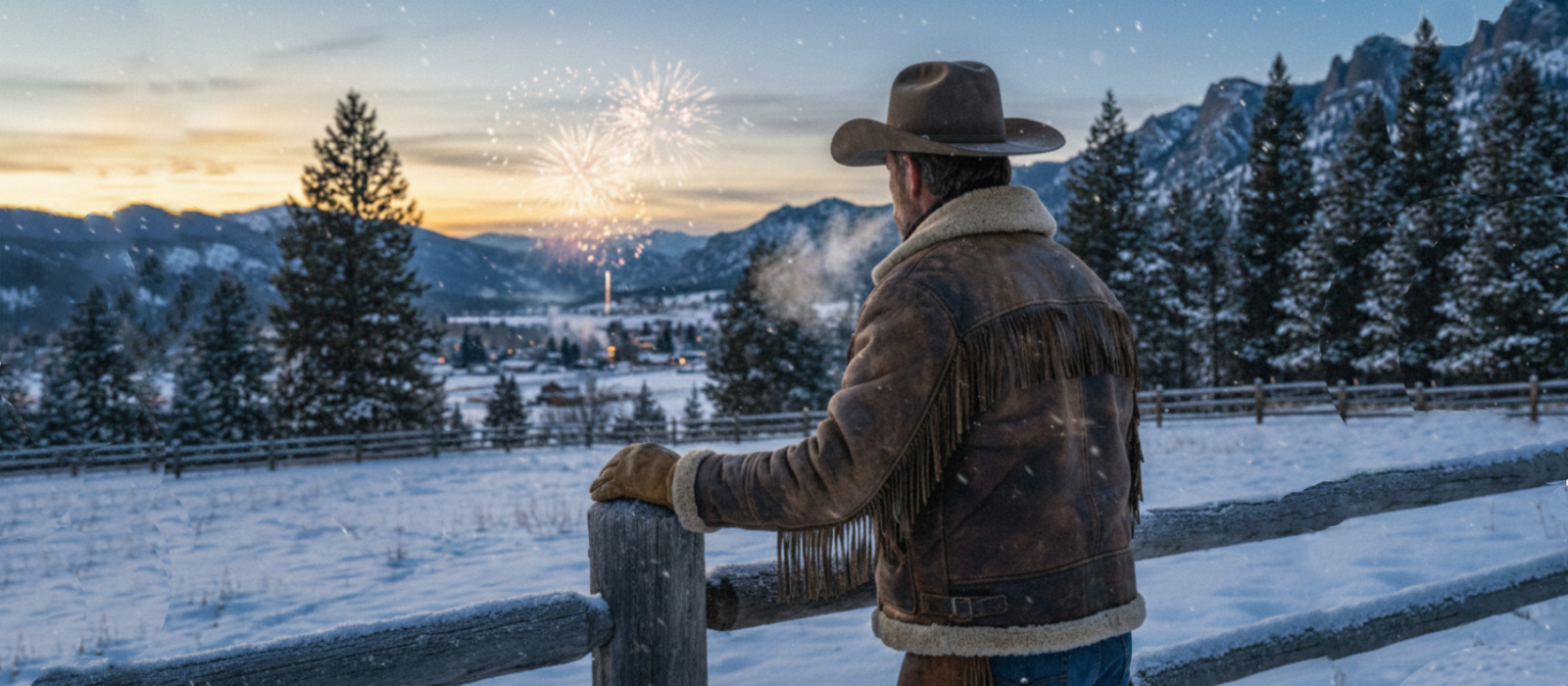
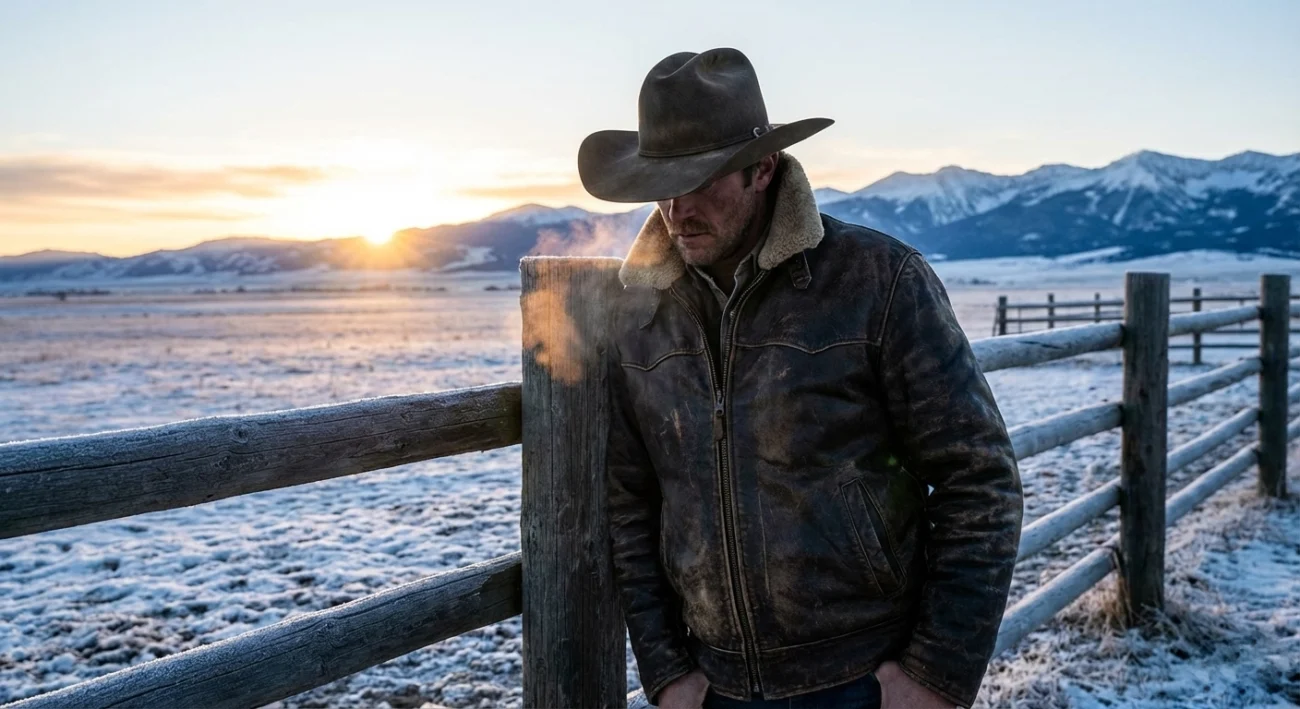
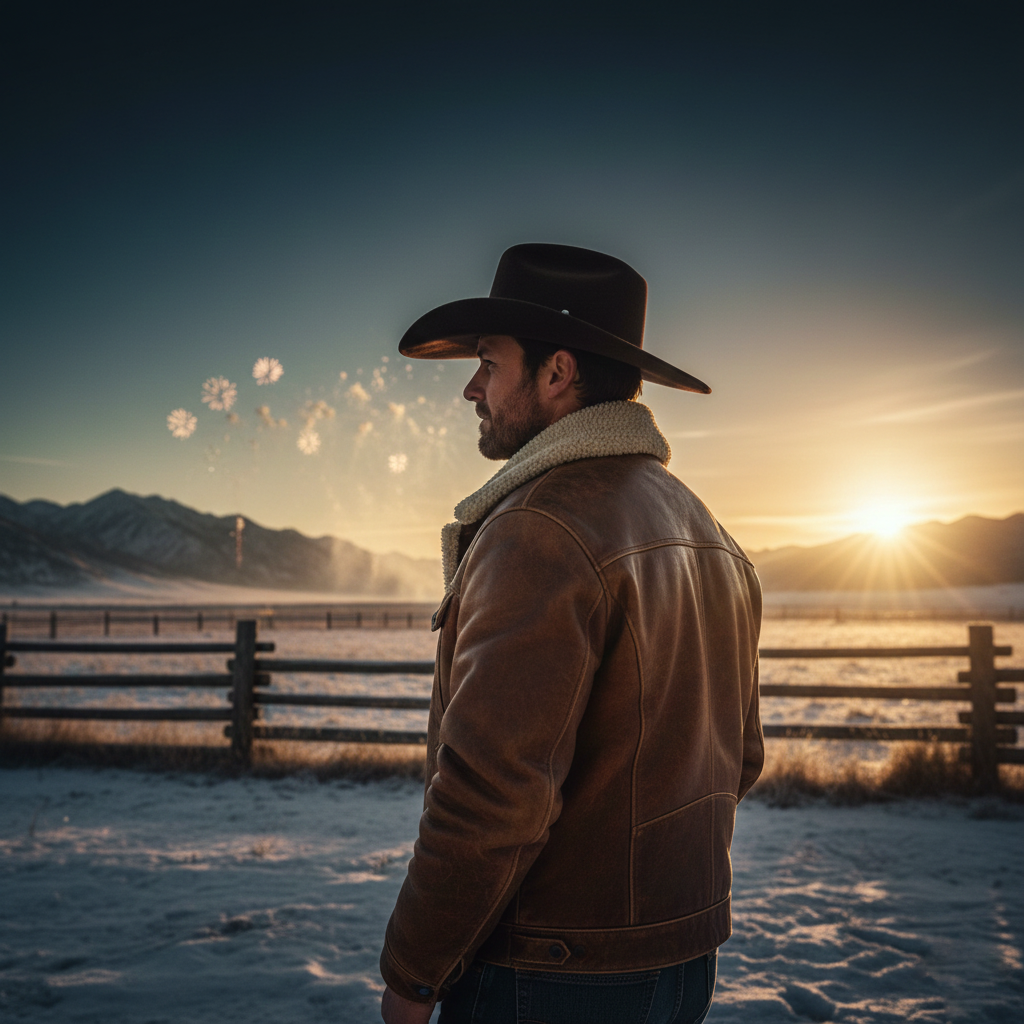
You know that feeling come January? You’re full of big intentions—eat better, move more, finally get “styled.” But by February, your gym pass is collecting dust and your “wardrobe refresh” consists of the same three hoodies on rotation.
Here’s a different kind of resolution—one you won’t abandon by mid-February.
A Western cowboy jacket.
Not as a trend. Not as costume. But as a legacy piece: something that gets better with age, carries your story, and outlasts every other so-called “investment” you’ve ever made in fashion.
I’ve worn one for over a decade—through ranch work, road trips, city winters, first dates, job interviews, even my brother’s wedding (yes, really). I’ve helped hundreds of clients—urban office workers, weekend riders, heritage seekers—find the one jacket that finally sticks. And I’ll tell you now: when you choose a real cowboy jacket, you’re not just buying outerwear. You’re making a promise to yourself about how you want to live.
Let’s talk about why that promise matters—and how to keep it.
The Jacket That Outlasts Your Resolutions
It’s Not About Fashion — It’s About Faithfulness
Most New Year “upgrades” fail because they’re built on performance, not presence. You buy a blazer to “look professional.” A puffer coat to “get through winter.” But the moment you’re not in that context, they vanish back into the closet.
A true Western cowboy jacket doesn’t work that way.
It’s built for life. Not a season. Not a role. But the whole messy, beautiful arc of it.
- Leather that learns your posture—not just covers it.
- Stitching that holds through hailstorms—not just Instagram backdrops.
- A fringe that whispers when you walk, not screams for attention.
This isn’t nostalgia. It’s resilience. And in a world of fast fashion and disposable style, resilience is the ultimate rebellion.
“I bought my jacket in ’09,” a rancher told me last spring. “My dad wore his till he died at 87. Now my son’s saving up for his own. That’s not clothing—that’s continuity.”
Choosing Your Kind: Not All Cowboy Jackets Are Born Equal
Forget “types.” Think intentions.
If you want warmth that doesn’t bulk → Go for a shearling-lined cowboy jacket
Forget those puffy parkas that make you look like a marshmallow. Real shearling (not faux) offers incredible insulation without the puff. It’s breathable, wind-resistant, and molds to your body over time. Ideal for sub-30°F winters—ranch, city, or ski town.
Watch out for: Jackets labeled “shearling” that only line the collar. True shearling cowboy jacket line the entire body. And if it’s machine-washable? Run. Real shearling is dry-clean only—and worth it.
If you’re building a signature look → Choose full-grain leather with subtle fringe
Fringe isn’t just decoration—it’s historical. Originally, it helped rainwater run off during storms. Today, it’s your quiet badge of authenticity. But too much fringe screams “costume.” The sweet spot? Minimal stitching—just a line down the sleeves or back yoke.
Pro tip: Full-grain leather develops a patina—a richer, darker glow—with wear and sun. It never cracks. It ages like whiskey.
If low maintenance is non-negotiable → Try a premium denim cowboy jacket
Yes, denim counts. Especially if you’re new to Western wear or live in a milder climate. Look for 12–14 oz selvedge denim with reinforced stitching and real mother-of-pearl snaps. It softens beautifully, layers easily, and hides coffee spills like a champ.
Avoid: Anything labeled “distressed” out of the box. Real wear tells your story—not the factory’s.
If sustainability means more than a label → Choose handmade, vegetable-tanned leather
Most “eco-friendly” jackets use chrome-tanned leather, which leaches toxins into waterways. Vegetable-tanned leather uses natural tannins (from bark, fruit, leaves)—slower, costlier, but cleaner. And when cared for, it lasts 30+ years. That’s not slow fashion. That’s anti-fashion—in the best way.
Real Use Cases: Where This Jacket Actually Lives
- Morning school drop-off (paired with jeans and boots—no makeup needed, you still look intentional).
- Weekend trail rides (wind won’t rip the seams; rain beads right off).
- Holiday gatherings (that subtle western yoke? Makes your sweater look expensive).
- Job interviews in creative fields (shows you’ve got grit and taste).
- Your 60th birthday (when your grandkid asks, “Can I borrow your jacket?”).
The magic? It doesn’t try to fit in. It defines the room.
What Most Guides Won’t Tell You: The Hidden Details That Make or Break It
You can spot a cheap cowboy jacket in 10 seconds—if you know where to look:
- Zippers: If it’s not YKK, it’ll snag or split within a year. Period.
- Lining: Viscose (not polyester) breathes better and won’t make you sweat.
- Seams: Double-stitched? Good. Triple-stitched on stress points (shoulders, pockets)? Even better.
- Closure: Real cowboy jackets use snap buttons—not plastic. They’re quiet, secure, and won’t pop open in wind.
And about leather “conditioning”:
You don’t need to do it monthly. In fact, over-conditioning softens the fibers too much, causing premature wear. Once a year—after winter—is enough. Use beeswax-based conditioner, not silicone.
Aesthetic Wisdom: How to Wear It Without Looking Like a Theme Park Extra
- Color: Stick to black, brown, or tan for versatility. Save burgundy or navy for your second jacket.
- Fit: Shoulders should sit right at your shoulder bone. Sleeves should hit mid-thumb. If it’s “fitted,” you’ll outgrow it in style—fast.
- Women: Look for shaped waist seams—not just men’s jackets shrunk down. Brands like Larson and Double RL get this right.
- Men: Avoid oversized yokes. A yoke should frame your shoulders, not swallow them.
And please—no rhinestones. Unless you’re performing at the Grand Ole Opry. Then, go wild.
Our Top 5 Tested Picks (No Fluff, Just Truth)
We’ve worn, washed, weathered, and even dropped these in mud to see what holds up.
- Schaeffer’s 1898 Shearling Jacket
For: Those who face real winter.
Why: 100% American shearling, hand-stitched, built by the same family for 127 years. Feels like armor with a soul.
Price: $1,200—but it’s your last winter jacket. - Taylor Stitch Elko Jacket
For: Urban explorers wanting subtle Western soul.
Why: Full-grain leather, YKK zippers, perfect fringe balance. Wore mine through a San Francisco fog season—zero complaints.
Price: $698. Worth every penny. - Ranchwear Co. Heritage Denim
For: First-timers or warm-climate wearers.
Why: Selvedge denim, real horn snaps, made in Texas. Breaks in like raw jeans—but with presence.
Price: $245. The gateway drug to Western wear. - Anderson’s Vintage Suede
For: Those who love texture over toughness.
Why: Genuine suede, viscose lining, minimal fringe. Looks expensive with a white t-shirt.
Caveat: Not for rain. But stunning in fall.
Price: $485. - Pancho Villa Originals Handmade Leather
For: Legacy builders.
Why: Made by one artisan in Santa Fe. Each jacket signed. Uses veg-tanned leather, 3mm thick. Your kids will fight over it.
Price: $1,500. But you’re not buying a jacket. You’re starting a dynasty.
How to Choose: The 3-Question Decision Framework
Answer these honestly:
- Will I wear this more than 30 days a year?
→ If yes, invest in leather or shearling.
→ If no, go denim or suede. - Do I care more about looking “cool” or feeling “capable”?
→ “Cool”? Choose modern cuts (slimmer sleeves, matte finish).
→ “Capable”? Prioritize function—reinforced elbows, deep pockets, wind flap.
Am I buying for me—or for an idea of who I want to be?
→ If it’s the latter, wait. A cowboy jacket reveals character. It doesn’t create it.
Care Like a Keeper (Not an Owner)
This isn’t dry-clean-and-forget. It’s a relationship.
- After rain: Hang it to air dry—never near a heater. Heat cracks leather.
- Storage: Use a wide cedar hanger. Never plastic bags—they trap moisture and mildew.
- Fringe: If it frays? Trim one thread at a time with sharp scissors. Don’t pull.
- Patina: Let it form. Don’t “protect” it with sprays. The scratches? That’s your history.
We’ve seen jackets from the 1940s still riding fences. Yours can too.