Western style has a reputation for being difficult to pull off. Too much fringe, and you look like a costume; too little, and the vibe gets lost. But when done right, a western cowboy outfit is one of the most versatile, durable, and timeless looks you can wear. It’s not just for rodeos or ranch work anymore—it’s a staple of modern Americana fashion, seen everywhere from Nashville honky-tonks to urban streetwear scenes.
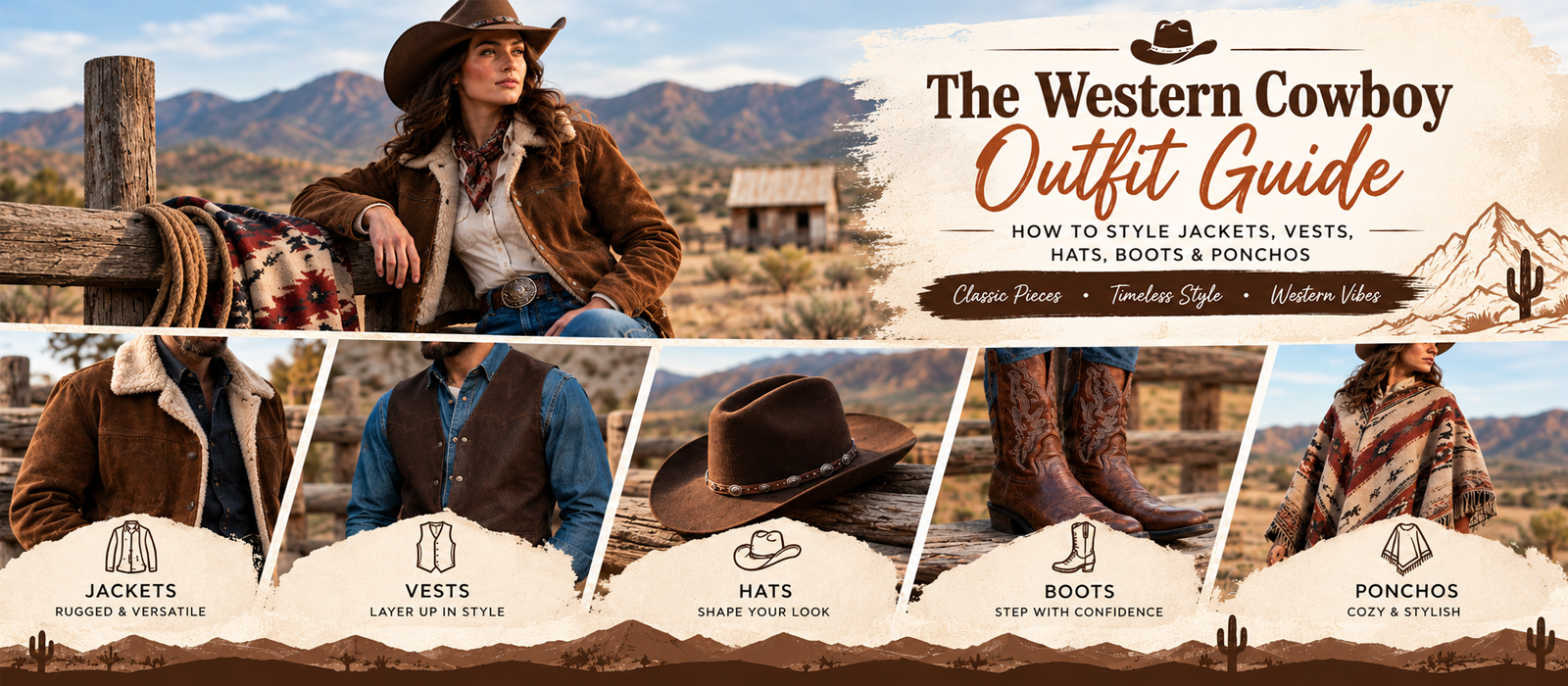
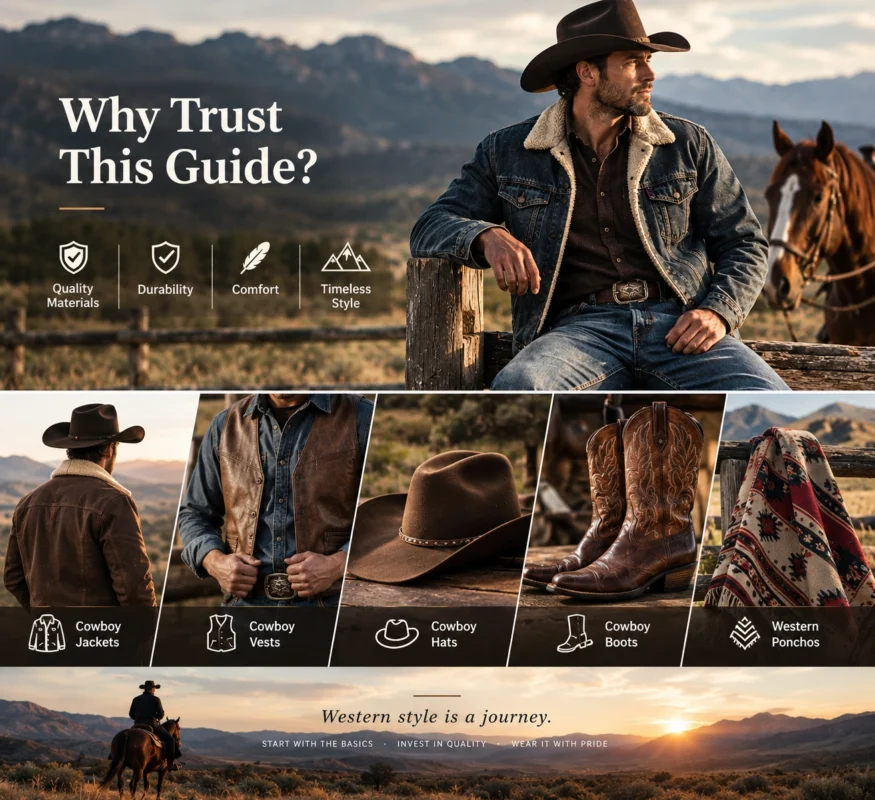
The secret isn’t buying the loudest piece in the store. It’s understanding balance, proportion, and material quality. Whether you’re aiming for a rugged ranch style, a polished Texas style look, or just want to add some cowboy core aesthetic to your weekend wardrobe, this guide breaks down the five essential pillars of western wear: jackets, vests, hats, boots, and ponchos.
How to Build a Western Cowboy Outfit: The Foundation
Before diving into specific items, it helps to understand the silhouette. Traditional western wear is structured and functional. It was designed for movement, protection, and durability. Modern interpretations keep that spirit but adapt it for daily life.
The Rule of Balance
Western outfits rely on contrast. If one part of your outfit is bold or bulky, the rest should be streamlined.
- Heavy Boots? Pair them with straight-leg or bootcut jeans that sit cleanly over the shaft. Avoid skinny jeans tucked into tall work boots unless you’re actually riding.
- Oversized Jacket? Keep the layers underneath fitted. A bulky shearling western jacket looks best with a simple tee and slim denim.
- Statement Hat? Let it be the focal point. If you’re wearing a wide-brimmed Stetson, keep your jewelry minimal and your shirt collar clean.
The Tuck vs. Untuck Debate
In traditional cowboy culture, shirts are tucked in. This isn’t just etiquette; it keeps fabric from catching on equipment and creates a clean line for your belt buckle. For a casual country western fashion look, an untucked plaid shirt works, but ensure it hits mid-zipper. Anything longer can look sloppy and disrupt your proportions.
Color Palette: Earthy and Authentic
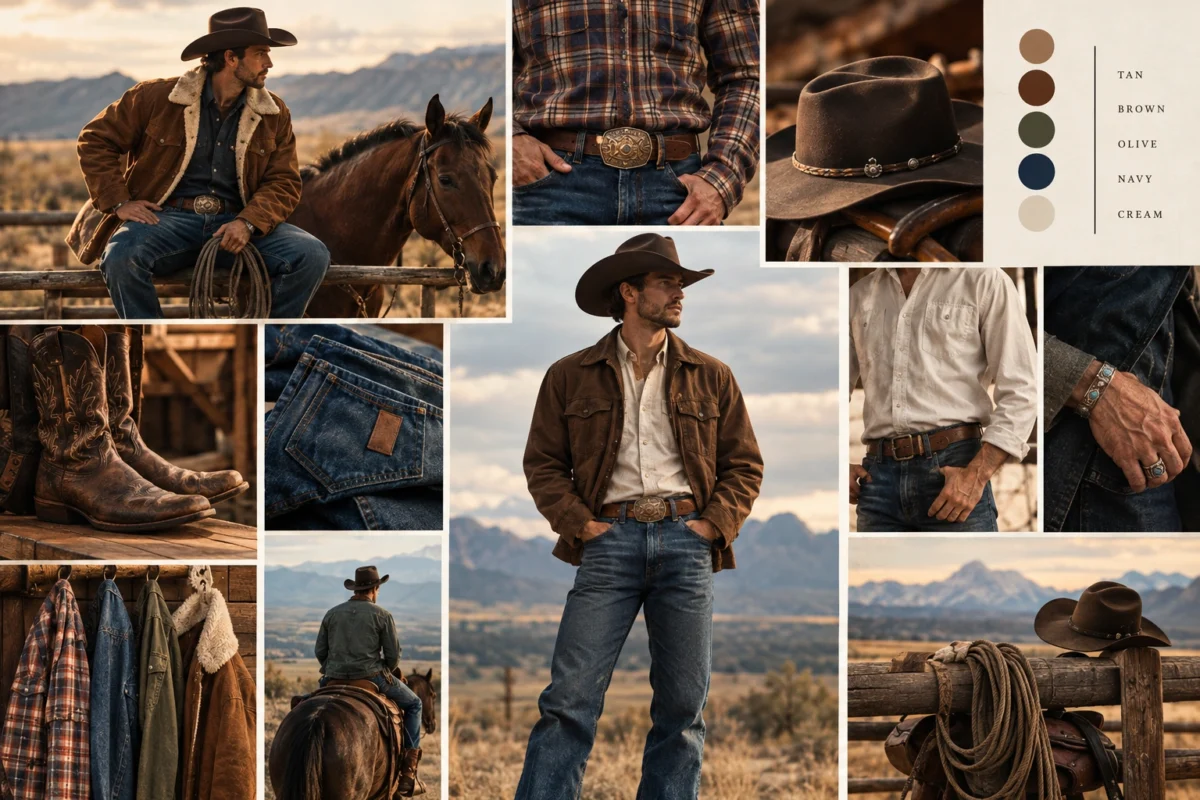
Stick to a desert palette: tans, browns, olives, navies, and creams. These colors mix and match easily, allowing you to build a capsule western wardrobe where every piece works with another. Denim is your neutral base—invest in good quality distressed denim or classic indigo for maximum versatility.
Cowboy Jackets: The Outer Layer That Defines Your Vibe
A jacket is often the first thing people notice. Choosing the right one depends on your climate and how formal you need to be.
Choosing the Right Material
- Denim: The most versatile option. A classic trucker jacket western style (like those from Levi’s or Wrangler) works for almost any casual setting. Look for sherpa lining if you need warmth without the bulk of a coat.
- Suede: Softer and more luxurious. A suede western jacket is perfect for transitioning from day to night. It pairs beautifully with dark denim and leather boots for a sophisticated modern cowboy style.
- Leather: Durable and ages well. A leather cowboy jacket with fringe or concho detailing makes a bold statement. Keep the rest of the outfit simple to let the jacket shine.
- Wool & Shearling: Ideal for winter. A Pendleton wool coat or a shearling-lined jacket offers serious warmth and a rugged frontier fashion aesthetic.
Styling Tips
- Layering: Wear a denim western jacket over a hoodie for a relaxed, contemporary look.
- Fit: Shoulders should hit your natural bone. The body can be slightly loose for layering, but avoid looking boxy.
- Occasion: Save heavy fringe for casual events or nights out. For a business casual western look, opt for a clean leather or suede jacket with minimal detailing.
Explore more options in our detailed guide to Cowboy Jackets.
Cowboy Vests: The Secret Weapon of Layering
Vests add texture and warmth without restricting arm movement. They’re also an easy way to dip into western chic without committing to a full jacket.
How to Choose a Vest
- Fabric: Avoid shiny polyester. Go for leather, suede, denim, or quilted cotton. A leather cowboy vest adds edge, while a denim vest western style feels more casual and youthful.
- Fit: This is critical. A vest should hug your torso. If it gaps at the buttons, it’s too big. If it pulls across the back, it’s too small.
- Style: Fringe vests add movement and visual interest, great for festivals or concerts. Quilted western vests are practical for outdoor work or chilly mornings.
Styling Tips
- Over a Shirt: Wear a leather vest over a button-down oxford for a smart-casual look that works in many Southern offices.
- Over a Dress: Yes, you can wear a cowboy vest over a dress. Try a fitted leather vest over a floral maxi dress for a balanced, feminine-yet-rugged look.
- Layering: In cold weather, wear a vest under a jacket for extra insulation without bulk. This is a pro tip for ranch wear in variable climates.
Find the perfect fit in our curated selection of Cowboy Vests.
Cowboy Hats: More Than Just Sun Protection
A hat completes the look, but it’s also functional. Knowing when to wear straw vs. felt is key to looking authentic.
Straw vs. Felt: The Seasonal Rule
- Straw: Spring and Summer. Breathable and lightweight. Look for tight weaves for a more refined appearance.
- Felt: Fall and Winter. Warm, structured, and water-resistant. Beaver felt is premium; wool felt is budget-friendly.
Finding the Right Fit
A proper fit means the hat sits snugly but doesn’t leave marks. It shouldn’t move when you shake your head gently. Measure your head circumference just above your ears and eyebrows. If you’re between sizes, size up and use foam strips for a custom fit.
Styling Tips
- Hairstyles: Pull curly or long hair back into a low bun or ponytail to avoid friction and mess. Short hair works naturally with most hat styles.
- With Suits: Yes, you can wear a cowboy hat with a suit. Choose a high-quality felt hat in a complementary color (e.g., grey hat with navy suit). Avoid black-on-black unless you’re aiming for a dramatic, formal look.
- Care: Brush dust off regularly with a soft brush. Store on a hat stand or upside down on its crown to maintain shape. Never submerge felt in water.
Discover the right shape for your face in our Cowboy Hats collection.
Cowboy Boots: Where Rubber Meets Road
Boots are the anchor of your outfit. Get them wrong, and the whole look fails. Get them right, and you can wear jeans and a t-shirt and still look intentional.
Understanding Toe Shapes
- Snip Toe: The most versatile. Narrow enough for dressier occasions, wide enough for comfort. Great for business casual or date nights.
- Square Toe: Traditional work boot style. Offers more room for toes. Best for actual ranch work or a rugged, utilitarian vibe.
- Pointed Toe: Fashion-forward. Often seen in exotic skins. Best for nights out or making a statement.
Shaft Height & Jeans Interaction
- Tall Boots: Designed to go under your jeans. The jean leg should break slightly over the shaft.
- Ankle Boots: Sit above the ankle bone. Perfect for wearing with cropped jeans, skirts, or dresses. If you’re wondering how to style ankle cowboy boots with skinny jeans, just let the jeans rest on top of the boot for a clean line.
Breaking Them In
New boots will feel stiff. Wear thick wool socks and start with short bursts (1–2 hours) at home. Use a leather conditioner to soften the material, but don’t soak them. Patience is the only real hack.
Care Tips
Clean dirt off after wear. Condition leather every few months to prevent cracking. Store with boot trees or rolled-up magazines to maintain shape.
Step into comfort and style with our range of Cowboy Boots.
Western Ponchos: The Underrated Layer
Ponchos have surged in popularity thanks to the southwestern desert style revival. They’re cozy, dramatic, and incredibly easy to wear.
How to Wear Without Looking Oversized
- Balance: Since ponchos are voluminous, pair them with slim-fit jeans or leggings. Avoid wide-leg pants underneath.
- Define the Waist: Add a leather belt with a statement buckle over the poncho. This transforms a blanket-like garment into a structured outfit.
- Layering: Wear a fitted turtleneck or long-sleeve tee underneath. For extra warmth, try a denim jacket over the poncho—a bold move seen in high-end western streetwear.
Material Matters
- Wool: Best for cold weather. Look for Mexican-style poncho or serape patterns for authenticity.
- Fringe: Adds movement. Great for festival fashion or autumn outings.
- Blanket Style: Cozy and casual. Perfect for dude ranch attire or chilly evenings.
Wrap yourself in warmth with our Western Ponchos selection.
Building Your Capsule Western Wardrobe
You don’t need 50 items. You need the right ones. Here’s a minimalist approach to building a versatile western wardrobe on a budget.
The Essential 5
- One Pair of Quality Boots: Snip toe, brown leather. Versatile for work and play.
- One Dark Denim Jean: Straight leg, no distressing. The base of almost any outfit.
- One Classic Jacket: Denim trucker or suede. Depending on your climate.
- One Felt Hat: Neutral color (tan or grey). Works for most seasons except peak summer.
- One Statement Accessory: A turquoise ring, a concho belt, or a bandana. Adds personality without bulk.
Mixing Vintage and Modern
Don’t be afraid to thrift. Vintage Levi’s western wear often has better denim quality than new pairs. Pair a vintage distressed denim jacket with new, crisp boots for a look that feels lived-in but intentional.